Cultivating Legacies: Why Family Offices and Corporate Capitals Must Invest in the Top 5 Conservation Destinations in Colombia
The global landscape of luxury travel has experienced a profound shift, discarding passive leisure in favor of transactional, high-yield ecosystem restoration and socio-environmental coherence. For ultra-high-net-worth individuals (UHNWIs), family offices, and corporate leadership, the modern journey is no longer about simple escapism. Instead, it represents a strategic opportunity to deploy capital directly into the preservation of globally significant biomes, generating a measurable impact return on biodiversity and cultural heritage.
Colombia, recognized as the second most megadiverse country on the planet, stands as a premier theater for this regenerative transition. Its extraordinary geodiversity and intricate biological systems offer unprecedented opportunities to align corporate ESG frameworks with localized conservation mechanisms.
Below, we analyze the top five conservation destinations in Colombia from a scientific, commercial, and territorial perspective, demonstrating why they represent the ultimate assets for high-value corporate travel and philanthropic legacies.
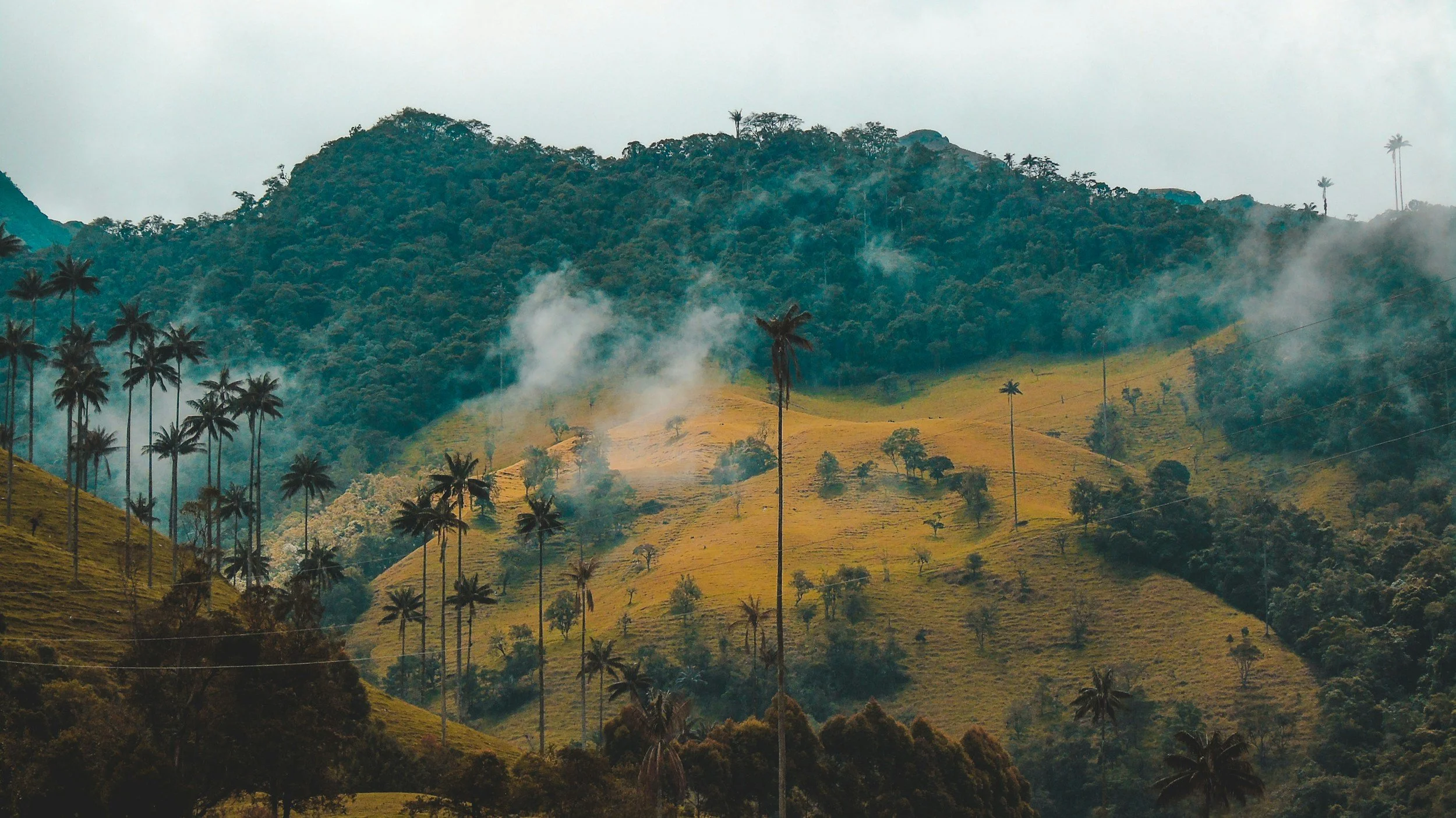
Biocultural Coherence
The operational framework that treats ecosystem conservation as inseparable from the self-determination, traditional knowledge systems, and economic autonomy of local territorial partners who have acted as the primary guardians of these geositios for millennia.
The Precambrian Monoliths of Cerros de Mavecure and the Guiana Shield
Deep within the department of Guainía lies one of the most ancient and stable geological structures on Earth: the Guiana Shield. Formed nearly 1.8 billion years ago through tectonic plate shifts before the separation of the American and African landmasses, this region features the imposing Cerros de Mavecure—massive, rounded granitic tepuys rising 300 meters above sea level.
This geosite represents a highly specialized, fragile biosphere. The surrounding soils consist of nutrient-poor white sands, which sustain a unique, miniature dwarf forest (minibosque enano) hosting a vast array of endemic species.
The Business and Impact Case: From an ESG perspective, visiting Mavecure is not merely an aesthetic exploration; it is an active mechanism for local economic formalization. By structuring exclusive expeditions through direct territorial partnerships with indigenous communities, corporate travelers fund local conservation monitoring, prevent agricultural encroachment on the transition forest, and preserve the living heritage of Guainía's original guardians.
The Macarenia Clavigera Phenomenon of Caño Cristales
Located within the Serranía de la Macarena in Meta, Caño Cristales is a 100-kilometer aquatic sanctuary globally renowned as the "river of five colors". Between June and November, the riverbed undergoes a dramatic chromatic transformation, turning into a vibrant canvas of deep reds, purples, yellows, and greens.
This phenomenon is driven entirely by the endemic, semi-aquatic plant Macarenia clavigera (which, scientifically, is a specialized freshwater plant, not an alga). The plant has adapted to the high-velocity currents of this 1.2-billion-year-old riverbed, clinging to quartz rocks and changing color based on the intensity of sunlight as the seasonal waters recede.
The Business and Impact Case: Caño Cristales is a gold standard for community-led tourism governance. Operations are governed by strict carrying capacities and the "Limits of Acceptable Change" (LAC) methodology, ensuring that visitor density never threatens the reproductive cycle of the Macarenia clavigera. For family offices, this destination offers a direct-to-destination funding model where travel capital directly subsidizes aquatic research, watershed protection, and community-led park ranger programs.
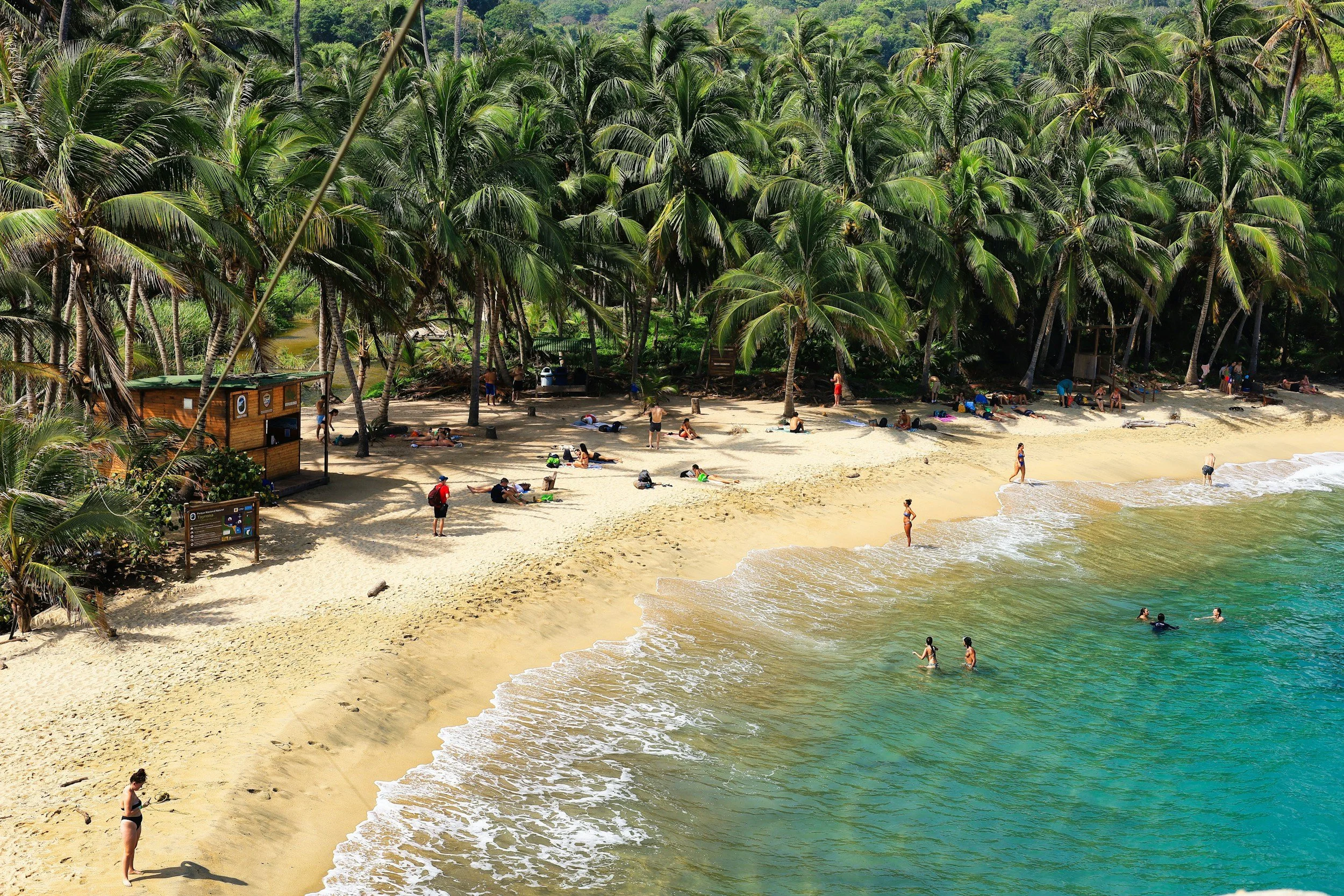
Parque Nacional Natural Gorgona: The Marine Conservation Laboratory
Positioned in the Colombian Pacific, Gorgona Island represents a striking narrative of ecological reclamation. Once a notorious high-security prison between 1959 and 1984, the Colombian government closed the facility to transition the entire island into a National Natural Park. Today, Gorgona is coverd 85% by dense tropical wet forest and surrounded by highly protected marine reserves.
The Business and Impact Case: Gorgona is a critical biological corridor within the Eastern Tropical Pacific Marine Corridor (CMAR), alongside the Malpelo Sanctuary. Between June and November, it serves as one of the primary breeding and calving grounds for humpback whales (Megaptera novaeangliae) migrating from Antarctic waters. The island also hosts extraordinary terrestrial endemism, such as the critically endangered blue lizard (Anolis gorgonae).
Corporate travel to Gorgona actively supports marine biological research, helps fund anti-poaching maritime patrols, and assists in the conservation of vulnerable marine ecosystems.
PNN Serranía de Chiribiquete: The Cosmic Heart of the Amazon
Declared a UNESCO World Heritage site, the Serranía de Chiribiquete represents one of the most restrictive and culturally sacred conservation areas on the continent. Its towering, vertical sandstone tepuys date back 1.3 billion years and harbor over 75,000 prehistoric rock paintings.
These murals depict a profound shamanic cosmology, illustrating the relationship between ancient human populations—the earliest recorded in South America—and the jaguar (Panthera onca), a symbol of spiritual and physical sovereignty.
The Business and Impact Case: To safeguard the voluntary isolation of uncontacted indigenous tribes and protect the park's hyper-sensitive biophysical balance, ground access to Chiribiquete is strictly prohibited. However, NUNA SINSI designs highly exclusive, low-impact scientific overflights led by expert conservation biologists.
A significant portion of the capital generated from these educational overflights is routed directly into satellite monitoring programs, contributing to real-time defense against illegal deforestation in the Amazon basin.
Santuario de Flora y Fauna La Macuira: The Desert Cloud Forest Oasis
Located in the extreme, hyper-arid north of the La Guajira peninsula, La Macuira is an ecological anomaly. It consists of an isolated mountain range rising up to 867 meters above sea level, which acts as a condensing barrier for the incoming trade winds. This unique atmospheric interception allows a dense, high-altitude tropical cloud forest to thrive in the middle of a desert.
The Business and Impact Case: La Macuira is a critical water-regulating asset for the Wayuu territorial partners who inhabit this arid territory. It is home to a highly vulnerable microclimate that has adapted to extreme thermal stress and wind erosion.
By developing highly curated, low-impact corporate expeditions to this oasis, NUNA SINSI ensures that travel capital directly funds localized climate adaptation infrastructure, such as sand-dune stabilization and community-governed water wells, while respecting Wayuu customary laws (Ley de Origen).
Conclusion
The preservation of Colombia’s megadiversity is not a passive task; it requires the active, direct indexation of private corporate capital. By choosing these five conservation destinations in Colombia for your family office retreats, high-end corporate incentive programs, or philanthropic travel portfolios, you achieve profound intellectual and physical restoration while delivering a permanent, auditable contribution to global biological and cultural resilience.
The Chicaque Highland Model: A Blueprint for Regenerative Business Partnerships
As a regional benchmark, the Chicaque Natural Reserve in the Andean highlands demonstrates the commercial viability of this model. By strictly matching high-end corporate wellness retreats with active cloud forest reforestation—specifically using native tree ferns (helecho sarro) to recover pasture-degraded soils—Chicaque proves that private-community partnerships can successfully rebuild biological connectivity corridors while guaranteeing a highly structured, auditable impact return for international investors.
For Family Offices, Trustees, and ESG Directors: Elevate your organization's sustainability legacy from abstract carbon offsetting to direct-to-destination ecological restoration. Partner with NUNA SINSI to co-create bespoke, high-impact wellness expeditions that directly support the sovereignty of our territorial partners and protect Colombia's most vulnerable geodiversities. Contact our Chief Content Strategist today to structure your custom regenerative travel portfolio.
Bibliography
Castaño-Uribe, C. (2019). Chiribiquete: La maloka cósmica de los hombres Jaguar. Grupo de Inversiones Suramericana.
Giraldo, A., Diazgranados, M. C., & Gutiérrez-Landázuri, C. F. (2014). Isla Gorgona, enclave estratégico para los esfuerzos de conservación en el Pacífico Oriental Tropical. Revista de Biología Tropical, 62, 1–15.
Hormizda Fonseca, C., Rey-Rodero, D., Restrepo, P., Moros, L., Vilardy, S., García, J., Mogollón Gómez, B., Parrado, A., Quintana, A., Neira Faudel, A., & Pardo, L. (2024). Guía técnica para el diseño de proyectos de Pagos por Servicios Ambientales (PSA) en turismo de naturaleza. Ministerio de Ambiente y Desarrollo Sostenible, USAID, Universidad de los Andes.
Ministerio de Comercio, Industria y Turismo (MinCIT). (2020). Política de turismo sostenible: Unidos por la naturaleza. República de Colombia.
Parques Nacionales Naturales de Colombia. (2010). Metodología para el monitoreo de impactos del ecoturismo y determinación de la capacidad de carga aceptable. ASSA.
USAID, & ProColombia. (2021). Manual ilustrado para guías de turismo de naturaleza en Colombia: Contemplar, Comprender, Conservar. ProColombia.
